 Tabernacle Baptist Church was listed on The National Register of Historic Places, July 10, 2013. Tabernacle Baptist was organized in 1884 for Selma University students, faculty and emerging middle-class Negroes. The church’s ministers and members were leaders in pioneering and enduring African-American Baptist organizations, including Rev. Dr. D. V. Jemison, who served as president of the National Baptist Convention, USA, Inc. Tabernacle Baptist is the sole U.S. church from which have come four presidents and three general secretaries of the National Baptist Convention, USA, Inc.

Church History
Historic Tabernacle Baptist Church-Selma, AL Legacy Foundation
- A 501 (c) (3) Non-Profit Corporation
- July 17, 2018
- State of Alabama, County of Dallas
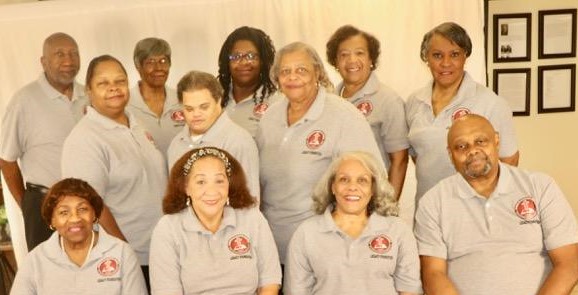
Board of Directors
- Chairman – Dr. Verdell Lett Dawson
- Vice-Chairman – Mr. Kirk Carrington
- Secretary – Mrs. Brittany Solomon
- Financial Secretary – Mr. Ricky Austin, Sr.
- Treasurer – Mr. Roosevelt Goldsby
- Director – Mrs. Sarah Aghedo, Community
- Director – Mr. John Crear, Community
- Director – Mrs. Devan Gray, Community
Ex-Officio Members
- Pastor Otis Dion Culliver, D.Min
- Diaconate Board Chairman – Samuel C Lett, M.D.
- Trustee Board Chairman – Mrs. Gwendolyn Carrington
- Tabernacle Outreach Organization Chairman – Mrs. Brenda Brown
Advisory Committee
- Margaret Broadnax
- Karen Brown
- Samuel Coleman
- Doris Cox
- Vanessa Goodwin
- Lamar Green
- Sean Lett
- Priscilla Mitchell
- Alvin Owens
- Dionne Reese
- Pearline Reese
- Angela Smiley
- Nikki Smiley
- Mrs. Mamie Thomas
- To create and maintain charitable, scientific and especially educational resources, adequate to ensure the well-being and efficacy of the Organization in compliance with Section 501 (C) 3 of The Internal Revenue Code of 1986; and
- To preserve, promote, communicate, sustain and extend historic legacy of Historic Tabernacle Baptist Church-Selma, AL through research, education and informational activities that increase public awareness of Church’s contribution to world progress through the National Baptist Convention, USA, INC. (1864-2013) and the National Voting Rights Movement (1963—1968); and
- To preserve and prevent deterioration of the historic Classical Revival Architecture of the Tabernacle Baptist Church Edifice Building, 1431 Broad ST-Selma, AL; and
- To preserve, promote, communicate, sustain and extend the historic legacy of Historic Tabernacle Baptist Church through research, education and informational activities that increase public awareness of the Church’s contribution to African-American advancement.
Tabernacle Baptist Church has stood in the front line of the American Christian World serving as a leading voice in the Baptist denomination on the state and national levels. TAB has produced many leaders who served with the Baptist denomination.
Dr. E. M. Brawley, Pastor
- President of the National Baptist Convention, USA INC (1891-1892)
- President of Selma University (1883-1886)
- Organizer of the Alabama Baptist Women’s State Convention May 1885 at Tabernacle
Rev. S. T. Clanton, Member
- General Secretary of the National Baptist Convention, USA, INC (1885-1888)
Dr. D.V Jemison, Pastor
- President of the National Baptist Convention USA,, INC (1941-1952)
- President of the Alabama Baptist State Convention (1917-1954)
Prof. R. B. Hudson, Trustee
- Secretary of the Alabama Baptist State Convention (1897-1931)
- General Secretary of the National Baptist Convention, USA Inc. 1908-1931
Dr. T. J. Jemison, Member and son of Dr. D. V. Jemison
- General Secretary of the National Baptist Convention, USA Inc. 1952-1982
- President of the National Baptist Convention, USA Inc 1982-1994
Dr. Pauline E. Dinkins, Member
- Medical Missionary-Foreign Mission Board of the National Baptist Convention, USA , Inc.
After worshiping in the chapel on the Selma University campus for several months, the trustees succeeded in borrowing $500 from the American Baptist Home Mission Society to erect the first house of worship in 1885.
However, the structure fell during the construction and Dr. Brawley secured another loan to resume the building project by mortgaging his fine library as collateral. The building was completed in 1885 and remodeled in 1900.
In 1922 our present facility was constructed next door to the original edifice. It was a product of the Rev. Dr. D. V. Jemison pastorate. Like his pastorate the Tabernacle Baptist Church Edifice is also nationally significant for its Classical Revival Architecture, accomplished by the untrained African-American architect David T. West who was also the untrained contractor and builder. He was a Tabernacle deacon.
It is the most formidable Classical Revival design of any African-American institution in Selma from the Jim Crow era. The building has been recognized as a national treasure from its unique architecture, which includes: multi-colored stained glass windows on all facets of the building as well as a dome and clerestory, which allows natural light to shine down on the huge open interior. This national treasure is also known for its separate and equal entrances on Broad Street and Minter Avenue.
In May 1963, Mrs. Amelia Boynton-civil rights activist and SNCC Director of Alabama Voter Registration Campaign Bernard Lafayette, Jr. sought a site for civil rights activist-Samuel Boynton’s memorial service as a vehicle for voting rights activism.
A number of churches did not want to host this service out of a justified fear of white reprisals. Pastor Louis Lloyd Anderson volunteered Tabernacle as the host site.
This decision was met with reservation by the deacons and members of the Tabernacle Baptist Church who asked Anderson to change his mind. Anderson was reported to have responded, “If you will not allow me to use the church edifice, I will hold the meeting on the sidewalk.”
Thus, the first mass meeting for the 1960s Voting Rights Movement was held on May 14, 1963, 7:00 PM in the sanctuary of Tabernacle Baptist Church. The mass meetings were later moved from Tabernacle due to the central visible location of Tabernacle as a safety precaution to First (Colored) Baptist Church (Youth mass meetings) and eventually to Brown Chapel A.M.E. Church (Adult mass meetings).
Moreover, since the 1920s, a group of local leaders had forged together to work for freedom and opportunity in secret. They expanded The Selma Civic Association and renamed themselves The Dallas County Voters’ League. In fear of violating a legal injunction, the larger group diminished in size to a group of eight who became known as “The Courageous Eight.”
This group of audacious leaders worked to develop the grassroots community leadership that provided the framework for the Voting Rights Movement. They invited Dr. Martin Luther King, Jr. to Selma to help them with this work.
Among these leaders were two members of Tabernacle Baptist Church: Reverend J. D. Hunter and Sister Marie Foster.
When Dr. King and his fellow civil rights workers came to Selma, they needed lodging during the Jim Crow Era. Tabernacle Trustee Sullivan Jackson, DDS and his wife Jean Sherrod Jackson, opened their home as the King Headquarters. Dr. Jackson was the brother of Mrs. Foster and Mrs. Jackson was a family friend of Mrs. Coretta Scott King.
Continuing the Tabernacle relationship with the Boynton Family, Tabernacle was the site of the homegoing services for Mrs. Amelia Boynton-Robinson in 2016 and the son of S W and Amelia Boynton, Attorney Bruce Boynton in 2021. (Boynton v. Virginia, 364 U.S. 454, a landmark decision of the US Supreme Court.)
Dr. E. M. Brawley (1884 – 1886)
Dr. C. L. Purce (1886 -1888)
Reverend L.J. Green (1888 – 1890)
Reverend C. L. Fisher (Between 1886 and 1902)
Reverend C. P. Jones (Between 1886 and 1902)
Reverend W. E. Bradford (Between 1886 and 1902)
Reverend W. H. McAlpine (Between 1888 and 1897)
Reverend R. T. Pollard (Between 1886 and 1902)
Reverend D. V. Jemison (1902 – 1929) (1936 – 1955)
Reverend Harry E. Jones (1930 – 1931)
Reverend M. J. Sherrard (1933 – 1935)
Dr. L. L. Anderson (1955 – 1995)
Dr. Aaron Dobynes (1996 – 2001)
Reverend Rodney T. Morton (2002 – 2012)
Today, Tabernacle is a thriving church, under the leadership of Pastor Otis Dion Culliver, M. Div., (2013 – ), dedicated to making disciples for the Lord Jesus Christ through the transforming power of the Holy Spirit.
We are a fellowship of baptized believers committed to developing mature disciples through Christian Worship, Christian Education, Christian Evangelism, and Christian Mission.
We continue to be the church “Where Christian Stewardship and Social Justice Intersect,” building the kingdom in Selma, Alabama as well as abroad. To God be the glory for the things He has done and will continue to do!
Pastor Otis Dion Culliver writes, “We praise God for His faithfulness to our congregation throughout the generations. We are reminded of the Psalmist’s words, ‘The Lord has done this and it’s marvelous in our eyes.’ God be praised.”